F&F Surface Group · Flooring Guide
The Best Bathroom Flooring: Tile, Luxury Vinyl, Hardwood and What Goes Underneath
Updated November 2, 2026 · 8 min read
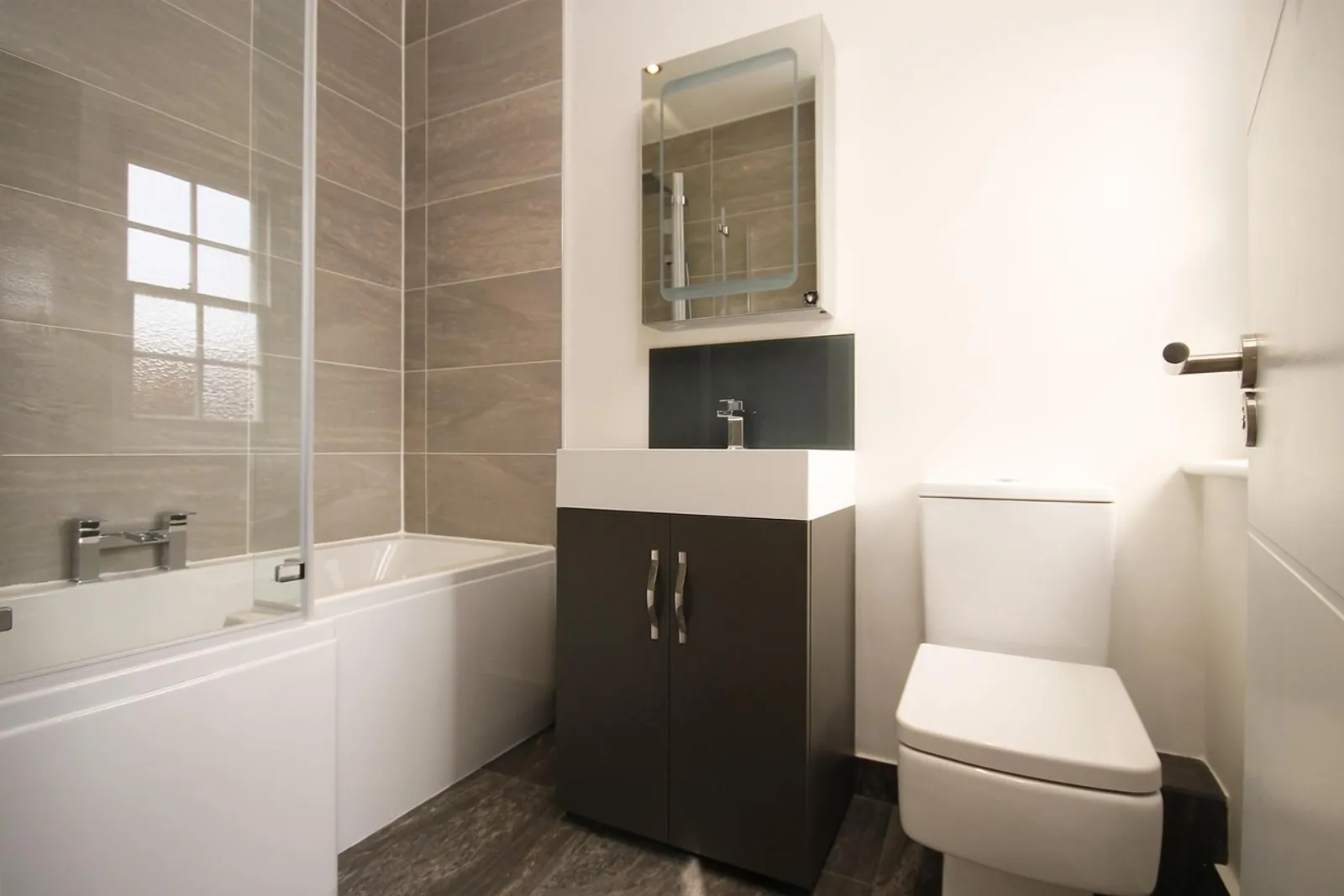
A bathroom floor takes more abuse per square foot than any other floor in the house: water from the tub and shower, steam every morning, a toilet that can leak slowly for months before anyone notices, and bare wet feet. The right choice depends mostly on one question: is this a full bathroom where people bathe, or a powder room? Here is how the common options compare, and what has to happen under the floor for any of them to last.
Full bathroom or powder room?
A full bathroom sees standing water, daily humidity and splashing. The floor needs to tolerate water on its surface and the installation needs to keep it from reaching the subfloor. A powder room has a sink and a toilet and nothing else. It is closer to a hallway than a bathroom, so far more materials work there, including the hardwood running in from the next room.
Porcelain and ceramic tile
Tile is still the standard for full bathrooms, and for good reason. Water does not hurt it, it does not stain or swell, and a well-installed tile floor lasts for decades. It also pairs naturally with electric radiant floor heat, which takes away its one real drawback: tile is cold underfoot on a January morning.
- Choose for grip. Look for a DCOF rating of 0.42 or higher, the standard for level floors that will be walked on wet. Matte and textured finishes are safer than polished ones.
- Mind the size. Smaller tiles mean more grout lines, and more grip. Large-format tile looks clean but needs a very flat floor.
- Plan the grout. Cement grout needs sealing; epoxy and urethane grouts resist staining and mildew with less upkeep.
Porcelain is denser and harder than ceramic, but in a bathroom either one works, because the glaze and grout are what face the water. Our porcelain vs. ceramic guide covers the ratings and the base tile needs in detail.
Luxury vinyl plank and tile
Luxury vinyl has become the most popular alternative to tile in DMV bathrooms, especially in hall baths, kids' baths and basement bathrooms. It is waterproof, warmer and softer than tile, quieter, and much faster to install. A dropped glass usually survives it. Stone-look luxury vinyl tile and wood-look plank are both available.
The caution is that "waterproof" describes the plank, not the room. Click-together vinyl floats, so water that runs off the edge of the tub or seeps from a failing wax ring can travel under the planks to the subfloor. In a bathroom we:
- use a rigid-core product rated for wet areas,
- leave the expansion gap the manufacturer requires and cover it with trim, never pinning the floor down,
- seal the perimeter at the tub, shower and toilet with flexible, mildew-resistant caulk.
Our vinyl flooring guide explains the difference between rigid-core and flexible vinyl, and how to read wear layer thickness.
Sheet vinyl
Sheet vinyl is the most water-tight resilient floor, because a small bathroom can often be covered in a single piece with no seams at all. Modern sheet products look much better than the vinyl of the 1980s. It is a good budget choice for a rental unit or a basement bath, though it does not add much to resale value.
Hardwood in a bathroom
In a powder room, hardwood is a great choice. Running the same floor from the hall into a powder room makes a small space feel part of the house, and a quality finish handles hand-washing splashes easily.
In a full bathroom, we generally advise against it. Wood moves with humidity, and a bathroom swings from dry to steamy every day. Water that sits around a tub or a slow toilet leak can stain, cup or rot boards. If you love the look, wood-look porcelain or luxury vinyl gives it without the risk. See our guide to water-damaged hardwood for what happens when wood and water meet.
Laminate and natural stone
- Laminate. Newer water-resistant laminates handle surface spills far better than older ones, but the core is still wood fiber, and long-standing water can swell it. It can work in a powder room. For full baths, luxury vinyl or tile is the safer pick. Our laminate vs. LVP comparison goes deeper.
- Natural stone. Marble, slate and travertine are beautiful and durable, but most stone needs sealing, and marble etches from acidic cleaners and some toiletries. Polished stone is also slippery when wet. A honed finish grips better. Marble-look porcelain gives a similar look with less care.
What happens under the floor
The old floor coming up is when we find out what the bathroom has been hiding. Things to expect:
- Soft subfloor at the toilet or tub. Years of small leaks can rot plywood. Soft spots are cut out and replaced before anything new goes down. Putting a new floor over a soft one only hides the problem.
- Toilet removal. The toilet comes out so the new floor runs underneath it, then is reset on a new wax ring. If the floor gets thicker, the flange may need a spacer so it still seals.
- The right base. Tile goes on cement board or an uncoupling membrane over a stiff subfloor, not straight onto plywood. Luxury vinyl needs a flat, clean surface, so old tile or vinyl is usually removed or the floor leveled first.
- Floor height at the door. Tile with its backer is thicker than the floor it replaces. We plan a transition at the doorway so there is no trip edge, and check that the door still swings freely.
Which floor for which bathroom
- Primary bath: porcelain tile, ideally with radiant heat, or premium luxury vinyl tile for a warmer feel.
- Kids' or hall bath: luxury vinyl plank or ceramic tile, both easy to clean after bath time.
- Powder room: hardwood matched to the hallway, tile, or luxury vinyl.
- Basement bath: porcelain tile or luxury vinyl on a moisture-tested slab. See our basement flooring guide.
- Rental unit: luxury vinyl or sheet vinyl for fast turnover and low cost. Our rental flooring guide covers durability for tenants.
The short version
- Full bathrooms: porcelain or ceramic tile first, waterproof luxury vinyl second.
- Powder rooms: almost anything works, including hardwood.
- Waterproof planks still need a sealed perimeter around the tub and toilet.
- Expect to find, and fix, soft subfloor around older toilets and tubs.
- Choose a tile with a DCOF of at least 0.42 so the floor is not slippery when wet.
Frequently asked questions
What is the best flooring for a bathroom?
For a full bathroom with a tub or shower, porcelain or ceramic tile is the most durable and water-tolerant choice. Waterproof luxury vinyl plank is a strong second, especially where you want something warmer, softer and faster to install. Hardwood and standard laminate are better kept to powder rooms, where there is no bathing water.
Is luxury vinyl plank really waterproof in a bathroom?
The planks themselves are waterproof, but the floor as a whole is not sealed. Water that gets past the edges, around the toilet or along the tub can reach the subfloor underneath. That is why we leave a proper expansion gap, seal the perimeter at the tub and toilet with flexible caulk, and treat any standing water as something to wipe up rather than ignore.
Can you put hardwood in a bathroom?
In a powder room, yes. Hardwood works well there and lets the floor run continuously from the hallway. In a full bathroom with a shower or tub, we usually advise against it: daily humidity, splashing and slow leaks around the toilet are hard on wood, and a water-damaged section is expensive to repair.
Does the toilet have to come out to replace a bathroom floor?
Yes. A proper job removes the toilet so the new floor runs underneath it rather than being cut around the base. It is reset on a new wax ring afterward. If the new floor is noticeably thicker, the toilet flange may need a spacer or extender so it seals correctly.
How long does it take to replace a bathroom floor?
A small bathroom in luxury vinyl plank is often done in a day. Tile usually takes one to two days for setting and grouting, plus time for the mortar and grout to cure before heavy use. Any subfloor repair found once the old floor is up adds time.
Redoing a bathroom floor? Request a free estimate. We bring tile and luxury vinyl samples, check the subfloor around the toilet and tub, and give you a written price that covers the base as well as the floor. Our prep checklist explains how to get ready.
Keep exploring
- → See our tile flooring services
- → Tile flooring in Rockville, MD
- → Vinyl flooring in Alexandria, VA
- → Tile flooring in Silver Spring, MD
- → Porcelain vs. Ceramic Tile: Choosing a Tile Floor for Kitchens, Baths and Mudrooms
- → Waterproof & Basement Flooring for Maryland Homes
- → Laminate vs. Luxury Vinyl Plank: An Honest Comparison